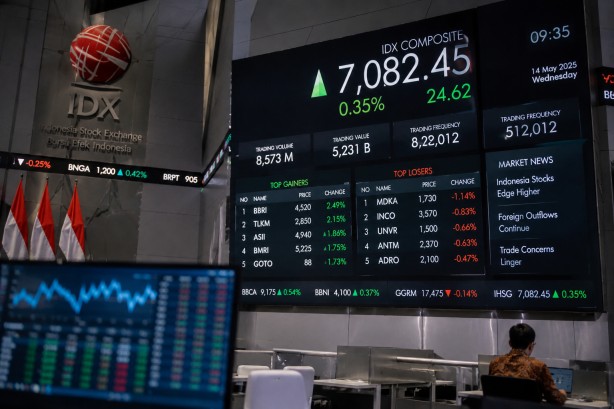
Indonesia’s stock market showed resilience in the week ending July 24, as the Jakarta Composite Index (JCI) posted a 0.34% increase amidst robust trading activity. This uptick came despite the persistent withdrawal of foreign investors and the overarching unease about the global economy. The market capitalization of the Indonesia Stock Exchange swelled to Rp 10,870 trillion, while the daily trading turnover saw a notable 41% rise, reaching Rp 19.76 trillion.
Nevertheless, foreign investment sentiment remained cautious, evidenced by the net selling behavior that resulted in cumulative outflows amounting to Rp 79.09 trillion for the year. The hesitancy among foreign investors reflects broader concerns about Indonesian assets amid uncertain global economic conditions.
Several factors contributed to the subdued market sentiment, including the escalation in global oil prices attributed to rising tensions in the Middle East. Furthermore, the imposition of new U.S. tariffs has added to these concerns. The U.S. recently levied a 10% tariff on certain imports from various trading partners, which includes specific goods from Indonesia, adding an extra layer of pressure.
Despite these challenges, Indonesia’s Finance Ministry remains optimistic about the country’s fiscal outlook. While acknowledging that the surge in oil prices could strain the 2026 state budget, the ministry assured that Indonesia’s overall fiscal health remains stable, underscoring the resilience of its economic foundations.