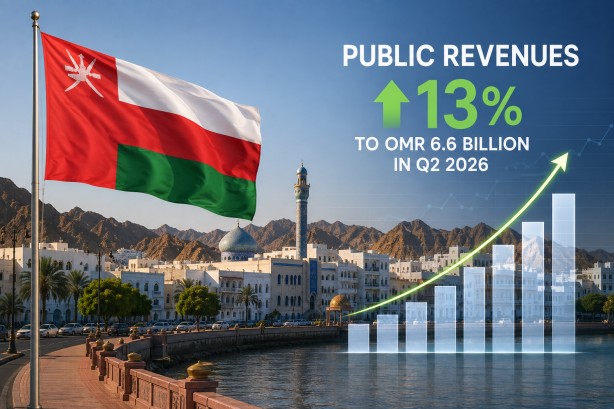
Oman’s public revenues increased by 13% year-on-year, reaching around OMR 6.602 billion by the end of the second quarter of 2026, according to recent data. This growth was primarily fueled by a rise in oil and gas revenues, underscoring the nation’s dependency on its rich energy resources. In the same period in 2025, the revenues stood at OMR 5.839 billion, reflecting a significant boost in the country’s financial health.
The Ministry of Finance’s Fiscal Performance Bulletin reported that net oil revenues rose by 10% to OMR 3.332 billion, while net gas revenues saw a substantial increase of 32%, amounting to OMR 1.164 billion. These figures highlight the positive impact of the energy sector on Oman’s economy. Additionally, the average oil price realized was $74 per barrel, with daily production averaging approximately 1.074 million barrels, contributing to the revenue surge.
While revenues climbed, public expenditure also saw an uptick, increasing by 9% to OMR 6.619 billion from OMR 6.098 billion a year earlier. This rise in spending was evident in several areas, with current expenditure reaching OMR 4.369 billion. Development spending by ministries and civil units accounted for OMR 798 million, indicating active investment in the country’s infrastructure and services.
Despite the higher spending levels, Oman managed to maintain its public debt relatively stable at OMR 14.16 billion, only slightly higher than the OMR 14.12 billion recorded during the same time last year. This stability suggests prudent fiscal management amid increased financial activity.
Overall, the figures from the first half of 2026 signal continued growth in Oman’s public finances, buoyed by robust energy revenues. The concurrent rise in government expenditure reflects ongoing investments in the nation’s development, demonstrating a balanced approach to managing economic growth and fiscal responsibility.