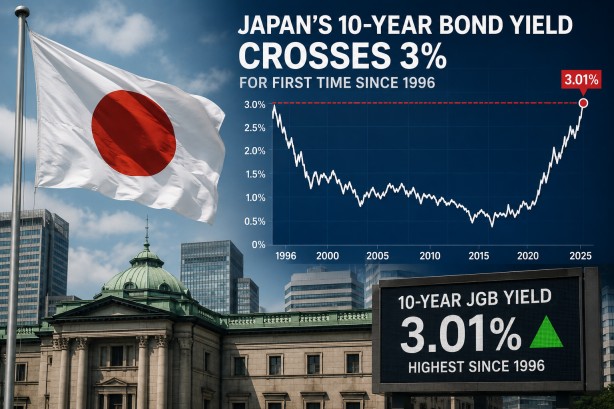
For the first time in nearly three decades, Japan’s benchmark 10-year government bond yield has surpassed 3%, marking a pivotal moment for the nation’s bond market and enhancing the attractiveness of domestic fixed-income investments. This significant increase is prompting some Japanese investors to reevaluate their overseas bond portfolios, which could alter the longstanding trend of Japanese capital flowing into international debt markets. So far this year, up to August 22, Japanese investors have pulled out a net ¥3 trillion ($18.7 billion) from foreign debt, according to official statistics.
The higher yields on Japanese bonds are making them more competitive, especially when taking into account the currency-hedging costs that diminish the returns from foreign investments. A recent survey involving 82 Japanese corporate pension funds revealed the strongest intention to boost domestic bond investments since the survey’s inception in 2008. This shift could have major implications for global financial markets, as Japanese investors have traditionally been significant buyers of U.S. Treasuries and other international sovereign debt. A consistent decrease in their overseas acquisitions might exert additional upward pressure on global bond yields and borrowing expenses.
The upward movement in Japanese bond yields is primarily driven by concerns over inflation, anticipated further rate hikes by the Bank of Japan, and increasing worries about Japan’s fiscal health. Analysts, however, suggest that this trend is more likely indicative of a slow reallocation towards domestic assets rather than an abrupt, large-scale withdrawal from international markets.
As the dynamics of Japan’s bond market shift, the impact on international markets could be substantial given the country’s historical role as a major player in global debt investment. The evolving landscape could lead to tighter conditions in international bond markets, influencing yields and borrowing costs worldwide.